Flooring Conversations: Layering Materials for Visual and Tactile Coherence
Flooring Conversations: Layering Materials for Visual and Tactile Coherence
Floors are the stage on which interior life unfolds. In renovation, the junctions between different flooring materials can either read as thoughtful transitions or as awkward seams. This essay examines practical strategies for layering and joining floors so that visual and tactile continuity supports circulation, acoustics, and maintenance.
Start with movement
Observe how people move through the space before specifying materials. Patterns of circulation—paths between entries and kitchens, edges along furniture, direct routes through rooms—should inform where durable surfaces are needed and where softer finishes can be accommodated. A well-placed durable strip beneath habitual paths reduces future wear and preserves the character of more delicate floor areas.
Choose a dominant material logic
Flooring systems read best when there is a dominant logic. This could be warm, continuous timber throughout living areas with punctuated stone at wet zones, or resilient sheet flooring in service areas contrasted with geometric tile in public zones. The dominant material need not be omnipresent, but its qualities—tone, texture, and joint rhythm—should be referenced where transitions occur so that different materials converse rather than collide.
Transition types and when to use them
Transitions serve both technical and aesthetic roles. Consider a few common approaches:
- Flush transitions: When materials can be leveled, a flush finish provides an unobtrusive connection. This works well between similar-thickness materials and in open-plan interiors where continuity matters.
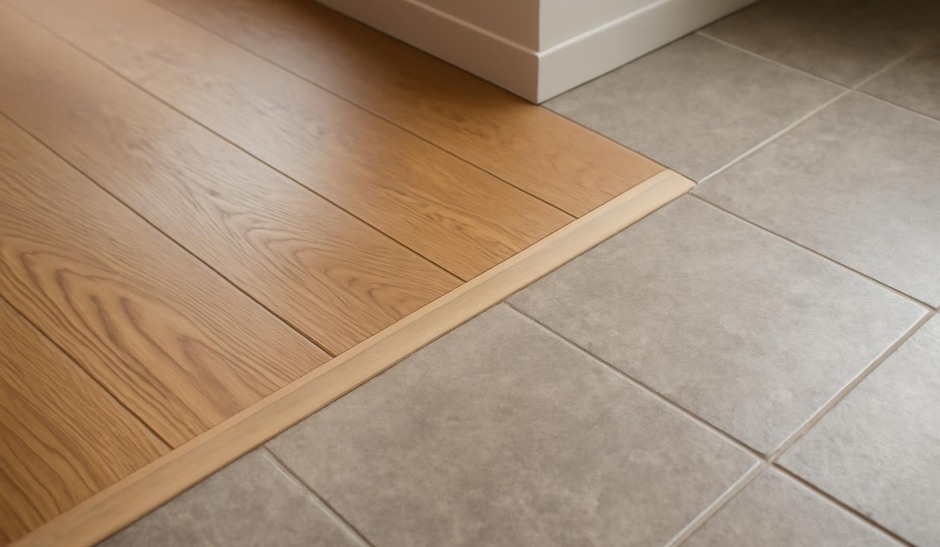
- Revealed joints: A thin metal or timber trim can articulate a change of material and protect an edge. Reveals are useful where materials will expand differently or where a durable edge is needed along a high-traffic seam.
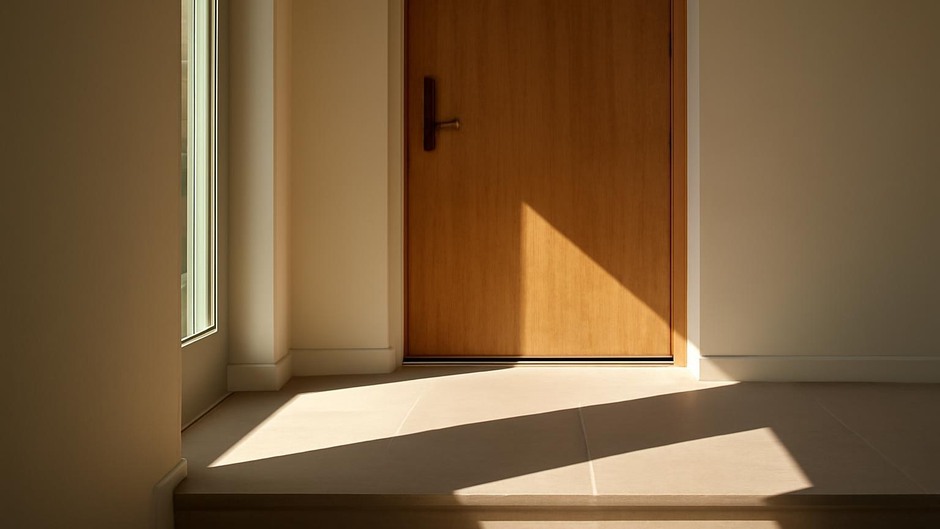
- Step or threshold: A small change in level can intentionally signal a programmatic shift, such as from public to private space. Keep steps minimal and consistent with accessibility considerations.
Material pairings and scale
Think about scale and texture when pairing materials. Large-format tiles next to narrow strip planks can look discordant unless the grout lines or plank widths echo a shared rhythm. Similarly, highly textured stone needs a calmer partner to avoid visual competition. Use a neutral joint material—mortar tone, metal trim, or a narrow wooden strip—to mediate differences without adding clutter.
Acoustics and underfoot comfort
Flooring choices affect sound and comfort. Hard surfaces reflect impact noise; softer materials damp it. In renovations, consider acoustic underlays beneath timber or tile to reduce noise in multi-level properties. In bedrooms and quiet spaces, a resilient underlay or area rugs can improve comfort and reduce fatigue underfoot without negating the overall flooring logic.
Durability and maintenance
Choose materials appropriate to use. Entrances and kitchens need surfaces that tolerate moisture and abrasion; living rooms and bedrooms can prioritize warmth and ease of refinement. Consider long-term maintenance: a surface that accepts spot repair will age more gracefully than one requiring full replacement. In mixed-material schemes, specify finishes that can be cleaned and renewed independently to avoid costly integrated repairs.
Composition across thresholds
At doorways and between rooms, the floor should help tell the spatial story. A thin band of stone can anchor an entry; a change in grain direction can subtly indicate a shift in use. Use these compositional moves sparingly and deliberately. If every doorway has a different treatment, the effect becomes noisy; a restrained palette and a small set of transition moves create cohesion.
Ultimately, treating floors as conversational partners rather than isolated decisions yields more coherent spaces. Observe movement, establish a dominant material logic, and choose transitions that are both technically resolved and visually considerate. The result is a layered floor that supports living, feels right underfoot, and ages with poise.